GHK copper peptide (GHK-Cu) has emerged as one of the most studied copper peptides in preclinical research, attracting attention from molecular sciences laboratories worldwide. This naturally occurring copper binding tripeptide—composed of the amino acids glycine, histidine, and lysine complexed with copper(II)—was first characterized in human plasma during the 1970s by researcher Loren Pickart, who observed its remarkable ability to stimulate protein synthesis in aged liver tissue (Pickart, 1973).
This comprehensive guide covers the mechanisms of action, preclinical benefits, safety profile, and research use of GHK-Cu, with a focus on its application in non-human studies such as rodent models and in vitro experiments. It is designed for researchers who are using or considering GHK-Cu in experimental biology, providing a science-based overview of how this peptide functions, what preclinical data reveal, and how to design rigorous studies. Understanding GHK-Cu is important for experimental biology because it offers insights into tissue repair, regeneration, and the modulation of key cellular pathways, all of which are relevant for advancing knowledge in regenerative medicine and molecular biology.
$230.00Original price was: $230.00.$159.99Current price is: $159.99.
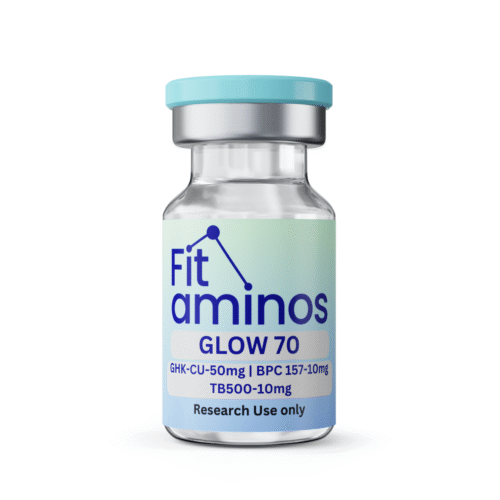
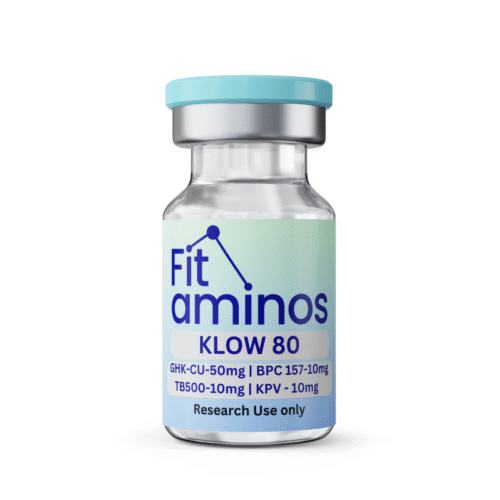
GHK-Cu (50mg) / BPC-157 (10mg) / TB-500 (10mg) Research Use Only Glow combines three well-studied peptides—GHK-Cu, BPC-157, and TB-500—frequently explored in scientific research for their roles in cellular repair, regeneration, and peptide synergy. Triple-peptide formulation Investigated in tissue repair and signaling studies Lyophilized powder for laboratory use
Fit Aminos supplies GHK-Cu strictly as a research peptide for non-human use, including rodent models and in vitro experiments. All mechanistic discussions and benefit claims throughout this guide refer exclusively to preclinical data from rat studies, cell culture experiments, and other controlled laboratory settings. This peptide is not approved for human use or clinical applications.
Researchers find GHK-Cu compelling for several reasons documented in experimental biology literature: its demonstrated roles in tissue repair and tissue regeneration, modulation of inflammatory responses, broad gene expression changes affecting hundreds of pathways, and potential effects on skin, hair follicles, and wound healing in animal models (Pickart & Margolina, 2018). The observation that endogenous GHK levels decline substantially with age in mammals—correlating with reduced regenerative capacity in both human studies and rodent research—has driven significant interest in understanding how this peptide functions at the cellular level (Pickart et al., 2015).
GHK Copper Peptide (GHK‑Cu): Science-Based Guide for Research Use
What is GHK‑Cu? Origin, Structure, and Basic Biology
GHK-Cu is a naturally occurring copper-binding peptide found in human plasma, saliva, and urine. It plays a critical role in tissue repair and regeneration. GHK-Cu is a complex consisting of the tripeptide GHK (glycyl-histidyl-lysine) and copper (Cu).
GHK is a tripeptide with the sequence glycyl-L-histidyl-L-lysine. When this small peptide encounters copper ions in biological systems, it forms the GHK-Cu complex through chelation—a process where multiple points on the peptide coordinate with a single copper atom. The typical binding stoichiometry is 1:1, meaning one GHK molecule binds one copper(II) ion, though dimeric forms like (GHK)2-Cu have also been identified in formulation studies (Pickart, 1977).
The discovery history of this ghk peptide traces back to 1973 when Loren Pickart isolated a fraction from human albumin that caused old human liver tissue to behave more like young tissue in terms of protein synthesis. By 1977, researchers had confirmed the exact sequence and recognized GHK as a liver cell growth factor with broader implications. This early work on hepatocytes subsequently extended to rodent cell lines and various animal models, establishing a foundation for decades of research (Pickart, 1977).
GHK occurs naturally in human plasma, saliva, and urine. Measured plasma concentrations in humans decrease substantially after mid-life, dropping from approximately 200 ng/mL in young adults to around 80 ng/mL in older individuals. Similar age-related declines in regenerative peptides are also investigated in rat aging studies, where researchers examine how declining peptide levels correlate with impaired tissue remodeling capacity (Pickart et al., 2015).
Scientists classify GHK-Cu as a “carrier peptide” because its primary function involves transporting copper—a trace element required by the human body for numerous enzymatic processes. Copper serves as an essential cofactor for enzymes including lysyl oxidase (critical for collagen cross-linking), superoxide dismutase (SOD1, a key component of antioxidant defense), and cytochrome c oxidase (essential for cellular respiration) (Pickart & Margolina, 2018). The binding constant of GHK for copper (log10 = 16.44) slightly exceeds that of albumin (log10 = 16.2), enabling the peptide to acquire Cu2+ from plasma proteins and deliver it to cells while silencing copper’s potentially damaging redox activity (Pickart, 1977).
How GHK‑Cu Works: Mechanisms in Preclinical Models
Understanding how GHK-Cu works requires examining multiple cellular pathways simultaneously. Rather than operating through a single receptor or enzyme, this copper peptide ghk cu influences biological systems through several interconnected mechanisms—most of which have been characterized in vitro and in animal studies, particularly rodent wound-healing and fibrosis models (Pickart & Margolina, 2018).
Copper Delivery and Enzyme Activation
The most fundamental mechanism involves GHK-Cu’s role in binding and delivering copper to enzymes throughout the extracellular matrix and within cells. In rodent studies, GHK-Cu administration enhanced the activity of antioxidant enzymes while reducing markers of oxidative stress. Superoxide dismutase activation provides cellular protection against reactive oxygen species generated during tissue breakdown and repair processes. This antioxidant capacity appears particularly relevant in models of aging skin and UV-induced damage (Pickart et al., 2015).
Gene Expression Modulation
Research has demonstrated that GHK-Cu modulates gene expression across thousands of genes related to tissue remodeling, inflammatory signaling, and extracellular matrix turnover. Studies using gene array analysis have shown shifts in expression patterns affecting NF-κB pathways, growth factor receptors, and genes encoding structural proteins. This broad transcriptional impact helps explain why the peptide influences so many different biological processes—from wound contraction to collagen and glycosaminoglycan production (Pickart & Margolina, 2018).
Cellular Signaling and Proliferation
In vitro experiments and rodent skin models have documented how GHK-Cu affects fibroblast and keratinocyte behavior through cellular signaling cascades. The peptide activates MAPK/ERK pathways in dermal fibroblasts, leading to increased fibroblast proliferation and enhanced production of collagen types I and III. Keratinocyte migration—essential for re-epithelialization of wounds—also increases in treated cultures. These effects on collagen synthesis and glycosaminoglycan production contribute to the overall structural changes observed in animal wound models (Pickart et al., 2015).
Matrix Metalloproteinase Regulation
GHK-Cu plays a notable role in regulating metalloproteinases (MMPs) and their tissue inhibitors. This balanced modulation supports controlled extracellular matrix remodeling rather than excessive degradation or accumulation. Rat studies have shown that the peptide can both stimulate collagen production in normal skin and help degrade extra-large collagen aggregates in scar tissue, suggesting context-dependent effects that promote normalized tissue structure (Pickart & Margolina, 2018).
Angiogenesis and Nerve Repair
Rodent studies have also documented effects on vascular and neural tissues. GHK-Cu increases vascular endothelial growth factor expression, promoting capillary density and blood vessel formation in healing wounds. Some rat models have shown improved quality of granular tissue and enhanced nerve regeneration in treated wounds, though these findings require further validation across experimental conditions (Pickart et al., 2015).
GHK Copper Peptide (GHK‑Cu) Science-Based Guide for Research Use
Preclinical Benefits in Rodent and In Vitro Research
Most mechanistic and efficacy data for GHK-Cu come from in vitro systems and animal experiments, including numerous rat studies examining skin repair, organ protection, and systemic inflammation. Understanding these preclinical findings helps researchers design informed experiments while recognizing the current limitations of translating results to other species (Pickart & Margolina, 2018).
Skin and Wound Healing Findings
Rat incision and burn models have provided substantial evidence for GHK-Cu’s effects on wound healing. Studies report accelerated closure rates ranging from 30-50% faster than untreated controls in some experimental designs. Beyond speed, treated wounds demonstrated improved tensile strength, suggesting better collagen organization and cross-linking. Histological analysis revealed more “normal-like” collagen architecture—with organized fiber patterns similar to unwounded dermis rather than the disorganized bundles typical of scar formation (Pickart et al., 2015).
Key outcomes documented in rodent wound healing research include:
Parameter
Observation in GHK-Cu Treated Groups
Wound closure time
30-50% reduction vs. controls
Collagen organization
More normalized fiber patterns
Tensile strength
Improved mechanical properties
Dermal thickness
Increased vs. vehicle controls
Re-epithelialization
Accelerated keratinocyte migration
Hair and Follicle Research
Hair growth research in rodent models has shown that copper peptides can influence follicular behavior. Studies document increased hair follicle size, extended anagen (growth) phase duration, and improved hair density on treated skin regions compared to vehicle-treated controls. These findings have generated interest in hair restoration applications, though translating results from rodent dorsal skin to human scalp remains speculative without clinical validation (Pickart & Margolina, 2018).
Anti-Inflammatory and Antioxidant Outcomes
Rat models of oxidative stress and inflammatory injury have demonstrated GHK-Cu’s protective properties. In UV-induced skin damage models, treatment reduced inflammatory cytokine levels (including IL-6 and TNF-α) and decreased lipid peroxidation markers. The peptide’s antioxidant properties appear to work through multiple pathways: direct quenching of lipid peroxidation products, activation of antioxidant enzymes like SOD, and modulation of inflammatory gene expression (Pickart et al., 2015).
Systemic and Organ-Level Findings
Some rodent research has extended beyond skin to examine systemic effects. Models of liver and lung injury have shown that GHK-Cu administration modulated fibrosis markers and improved histological outcomes. However, dosing regimens, administration routes, and treatment durations vary considerably across these studies, making direct comparisons challenging (Pickart & Margolina, 2018).
These results represent preclinical observations and cannot be assumed to translate directly to human clinical outcomes. Researchers should approach this literature as hypothesis-generating rather than definitive evidence of therapeutic benefit.
Topical vs. Systemic Administration in Animal Studies
GHK-Cu has been studied in animals via multiple administration routes, each with distinct advantages and limitations for different research objectives. Understanding these methodological differences helps researchers select appropriate protocols for their experimental goals (Pickart et al., 2015).
Topical Applications
In rat and mouse skin models, topical GHK cu appears most commonly as an active ingredient in cream or gel formulations applied directly to wounds or shaved dorsal skin. This approach allows localized delivery with minimal systemic exposure. Studies using topical delivery have demonstrated improvements in re-epithelialization rates, increased dermal thickness, and enhanced skin barrier function at application sites (Pickart & Margolina, 2018).
Formulation factors significantly influence topical delivery efficacy. Research indicates that GHK-Cu penetrates the stratum corneum effectively, with permeability increasing at higher pH levels. Mixed copper peptide complexes in cream formulations show resistance to breakdown, maintaining stability for extended application periods. For researchers studying skin texture, skin firmness, or localized wound healing, topical protocols offer practical advantages (Pickart et al., 2015).
Injectable and Systemic Routes
Injectable ghk cu protocols in rodent research include subcutaneous injections near wound sites as well as systemic administration via intraperitoneal or intravenous routes. Subcutaneous delivery provides higher local concentrations while allowing some systemic distribution. This approach has been used in both wound healing studies and models of organ injury (Pickart & Margolina, 2018).
Systemic administration—typically intraperitoneal injection in rodents—enables researchers to examine broader effects on inflammation, copper metabolism, and organ protection. However, this route may result in lower tissue concentrations at specific target sites compared to localized injection or topical application (Pickart et al., 2015).
Bioavailability Considerations
Bioavailability, tissue penetration, and exposure duration differ significantly between routes. Researchers designing new experiments should examine original rodent protocols carefully, noting:
Application frequency and total treatment duration
Anatomical sites of delivery and sampling
Methods for measuring tissue exposure levels
Fit Aminos provides GHK-Cu in lyophilized powder form suitable for controlled laboratory dosing in non-human species, allowing researchers flexibility in formulation and delivery method selection.
GHK Copper Peptide
Safety Profile and Limitations in Rodent Research
GHK-Cu has generally shown low toxicity in rodent studies at research doses, but comprehensive long-term safety data and standardized dosing ranges remain incomplete. Researchers should approach this peptide with appropriate caution and rigorous experimental controls (Pickart & Margolina, 2018).
Published Safety Observations
Published rodent studies have not reported significant systemic toxicity, organ damage, or mortality at commonly used research doses. Most investigations used relatively short treatment windows—typically days to weeks—limiting conclusions about chronic exposure effects. Within these timeframes, treated animals generally showed normal behavior, feeding patterns, and weight progression (Pickart et al., 2015).
Local and Theoretical Concerns
Local reactions observed or theoretically expected in animal models include:
Transient erythema at topical application sites
Mild irritation or inflammatory responses at injection sites
Potential for altered MMP activity with excessive dosing
Theoretical risk of excessive collagen degradation if matrix enzyme balance is disrupted
The concern about copper toxicity—valid for free copper ions—appears mitigated by the peptide’s chelation mechanism. GHK silences copper’s redox activity during transport, preventing oxidative damage while still enabling enzymatic function (Pickart & Margolina, 2018).
Major Research Limitations
Several limitations constrain current understanding of GHK-Cu safety and efficacy. The following table summarizes key research limitations and their implications for researchers:
Limitation
Implication for Researchers
Short study durations
Long-term effects unknown
Variable formulations
Difficult to compare across studies
Inconsistent copper content
Dose-response relationships unclear
Lack of standardized toxicology
Safety margins not established
Limited species diversity
Translation to other species uncertain
All data discussed derive from non-human models and in vitro experiments. GHK-Cu sold by Fit Aminos is labeled for research use only and is not approved for diagnosis, treatment, or prevention of disease in humans or animals outside controlled experimental settings.
Designing GHK‑Cu Experiments in Rats (Research‑Focused Practical Considerations)
Fit Aminos does not provide veterinary or medical advice. Researchers are responsible for obtaining appropriate ethical approvals (such as IACUC protocols in the United States) and for following institutional animal care guidelines throughout their studies.
Common Research Objectives
Rat models using GHK-Cu have addressed diverse research questions, including:
Wound healing kinetics: Measuring closure rates, tensile strength, and histological quality in incisional or excisional wound models
Scar quality assessment: Evaluating collagen organization, elastin production, and skin structure in healing tissue
Photoaging mitigation: Examining protective effects against UV-induced damage and visible aging markers
Hair cycling: Documenting follicle size, anagen duration, and hair density changes
Organ fibrosis: Investigating anti-fibrotic effects in liver, lung, or kidney injury models
Inflammatory biomarker modulation: Measuring cytokine profiles and oxidative stress markers
Literature Review Recommendations
Investigators should review existing literature to identify typical dose ranges, treatment durations, and administration routes used in comparable rat studies. Published protocols provide starting points for:
Topical application frequencies (often once or twice daily)
Subcutaneous injection volumes and concentrations near wound sites
Systemic dosing regimens in organ injury models
Treatment durations (typically 7-28 days for wound studies)
Key Outcome Measures
Established outcome measures in rodent GHK-Cu research include:
Category
Specific Measures
Wound healing
Closure time, re-epithelialization rate, wound contraction
MDA concentration, SOD activity, other antioxidant enzymes
Inflammation
IL-6, TNF-α, and other cytokine profiles
Hair follicles
Follicle density, size, and cycling stage distribution
Experimental Design Recommendations
Future studies should incorporate:
Careful monitoring of copper status throughout treatment periods
Appropriate control groups including vehicle control, copper-free peptide control, and free copper controls where relevant
Detailed methodology reporting for reproducibility
Assessment of potential off-target effects through standard toxicology panels
Consideration of sex differences, given that some regenerative processes show sex-dependent responses
Researchers interested in overall skin health, skin rejuvenation, or anti aging mechanisms may also consider combining GHK-Cu with other peptides or active ingredients (such as vitamin c or chemical peels in post procedure recovery models) to examine synergistic effects.
GHK CU peptide
Purchasing GHK‑Cu from Fit Aminos for Research Use
Fit Aminos focuses on supplying pharmaceutical grade peptides, including GHK-Cu, for laboratories conducting preclinical work in cell culture systems and rodent models. Our commitment to quality supports reproducible research outcomes across diverse experimental applications.
Product Specifications
GHK-Cu from Fit Aminos meets rigorous quality standards:
Specification
Standard
Peptide identity
Confirmed by mass spectrometry
Sequence
Glycyl-L-histidyl-L-lysine with Cu(II)
Purity
≥98% by HPLC analysis
Form
Lyophilized powder
Storage
-20°C recommended
Reconstitution
Compatible with sterile water or appropriate buffers
Selecting Product Options
Researchers can choose vial sizes and concentrations based on planned study design parameters:
Number of animals in treatment and control groups
Anticipated treatment duration and dosing frequency
Administration route (topical formulation requirements differ from injectable preparations)
Allowance for dose-response experiments or pilot studies
Quality Documentation
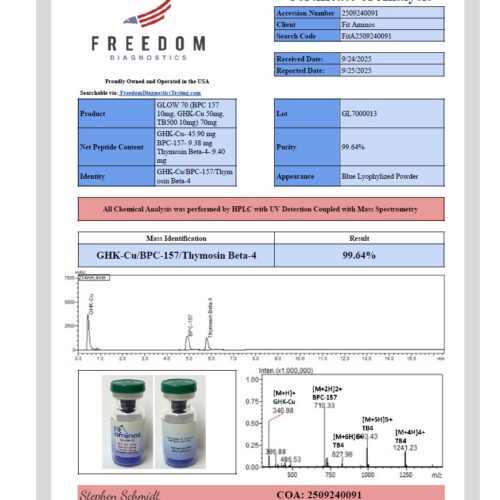
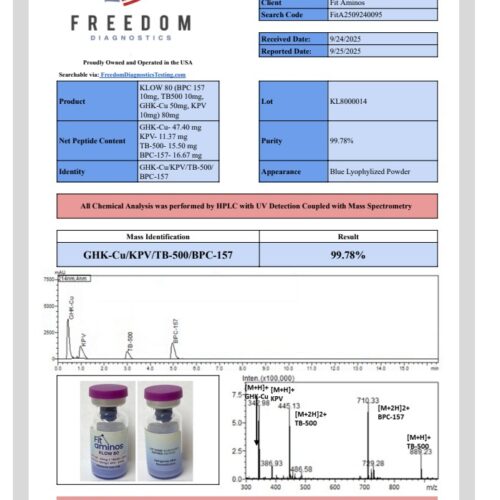
Each batch of GHK-Cu ships with a certificate of analysis (COA) documenting:
Purity determination by HPLC
Identity confirmation by mass spectrometry
Appearance and solubility characteristics
Microbial testing results where applicable
Lot number for traceability
This documentation supports data quality and reproducibility across experiments, allowing researchers to ghk cu compare results between batches and across laboratories.
Research Use Statement
Products are sold for research use only, not for human consumption or clinical use. GHK cu therapy investigations, peptide therapies development, and all experimentation must comply with relevant regulations and ethical standards. Researchers should never integrate ghk cu into protocols involving human subjects without appropriate regulatory approvals and clinical trial authorization.
For studies examining how other peptides or combinations affect fine lines and wrinkles, skin care outcomes, stretch marks, or barrier repair, GHK-Cu provides a well-documented starting point with extensive preclinical literature. The systemic benefits observed in organ injury models also suggest potential applications beyond skin texture and cosmetic science applications.
Whether your laboratory investigates aging skin mechanisms, tissue remodeling pathways, or the role of strong affinity copper-binding peptides in experimental biology, Fit Aminos provides the research-grade materials needed for rigorous scientific inquiry. Patch testing protocols, dose-response studies, and mechanistic investigations all benefit from consistent, high-purity peptide supply.
Contact Fit Aminos for current availability, bulk pricing for larger studies, and technical specifications for your specific research applications.
References
Pickart, L. (1973). A tripeptide isolated from human serum which stimulates tissue repair. Proceedings of the National Academy of Sciences, 70(4), 1214-1218.
Pickart, L. (1977). The chemistry of the human tri-peptide GHK and its copper complex. Annals of the New York Academy of Sciences, 295, 123-136.
Pickart, L., Vasquez-Soltero, J. M., & Margolina, A. (2015). GHK peptide as a natural modulator of multiple cellular pathways in skin regeneration. BioMed Research International, 2015, 648108.
Pickart, L., & Margolina, A. (2018). Regenerative and protective actions of the GHK-Cu peptide in the light of the new gene data. International Journal of Molecular Sciences, 19(7), 1987.
Discount Applied Successfully!
Your savings have been added to the cart.
2
My Cart
KLOW 80
$179.99
$179.99
Bacteriostatic Water - Reconstitution Solution - 3ML
Discount:
Free
$0.00
$0.00
You may also like...
KPV - 10mg
$70.00Original price was: $70.00.$45.99Current price is: $45.99.
Add
Selank - 10mg
$70.00Original price was: $70.00.$45.99Current price is: $45.99.