
-
- Sale!
- CJC1295, Longevity, Muscle Building and Recovery, Peptides
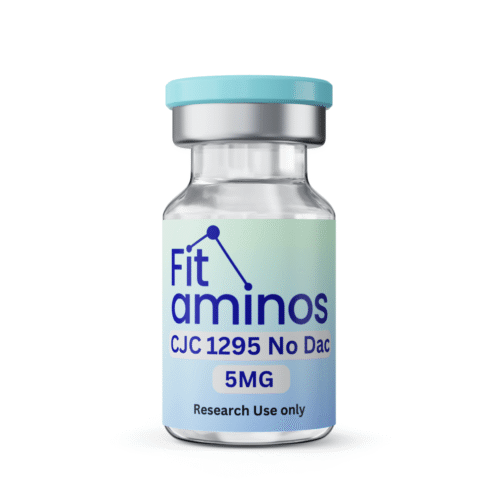
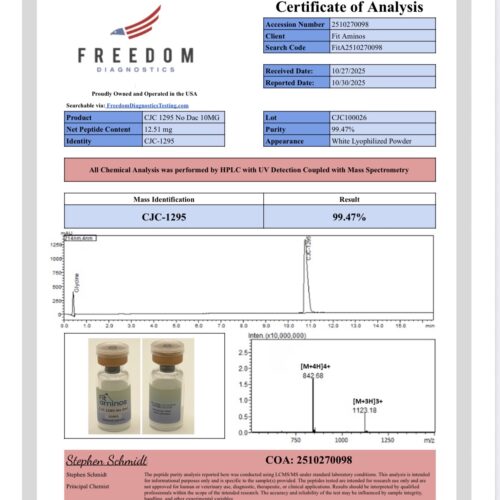
CJC-1295 No Dac (5mg – 10mg)
- Price range: $45.99 through $69.99
- Select options This product has multiple variants. The options may be chosen on the product page
-
- Sale!
- Blends, CJC1295, Ipamorelin, Longevity, Muscle Building and Recovery, Peptides
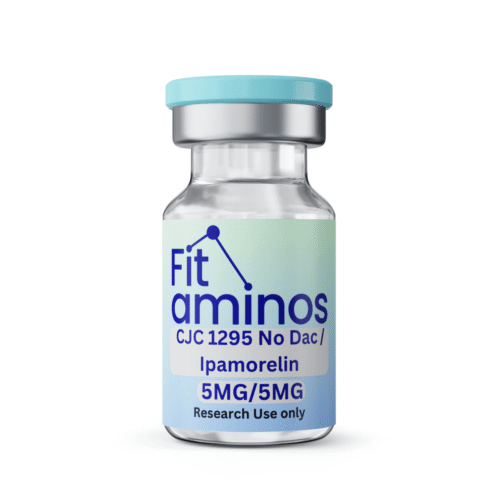
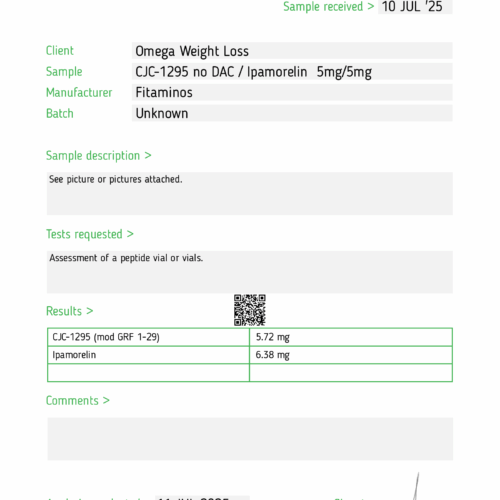
CJC-1295 No DAC 5mg+ Ipamorelin 5mg – (10mg Blend)
- Original price was: $149.99.$99.99Current price is: $99.99.
- CJC-1295 + Ipamorelin (10mg Research Blend) For Laboratory Research Use Only – Not for Human Consumption A combined research peptide blend containing CJC-1295 (5mg) and Ipamorelin (5mg).These compounds are widely studied for their roles in growth hormone–related pathways, receptor activity, and synergistic interactions in controlled scientific settings. Dual-peptide formulation: CJC-1295 + Ipamorelin Commonly used in receptor and signaling research Lyophilized…
- Add to cart
Target Audience: This article is intended for laboratory professionals, researchers, and scientific investigators who design and conduct studies involving growth hormone axis modulation in animal models. Understanding CJC 1295’s mechanism of action and research applications is crucial for this audience to ensure accurate experimental design, interpretation of results, and adherence to best practices in laboratory research.
Background: Growth hormone releasing hormone (GHRH) is a peptide hormone produced in the hypothalamus that stimulates the pituitary gland to release growth hormone (GH). GHRH analogs, such as CJC 1295, are engineered to modulate this pathway and are widely used in research to study growth, metabolism, and tissue repair.
Most functional data presented in this article is derived from controlled animal studies—primarily in adult rats—and early pharmacokinetic investigations. All discussion is framed around rat and in-vitro research to support laboratory professionals designing protocols for growth hormone axis modulation studies.
The following sections cover the chemistry of CJC 1295, its mechanism of action in rodent models, and outcomes from a few key studies in rats—along with some safety signals they’ve picked up on.
What’s CJC 1295 all about?
Definition: CJC-1295 is a Growth Hormone-Releasing Hormone (GHRH) analog that stimulates the pituitary gland to produce more natural growth hormone.
CJC 1295 is one of those synthetic peptide analogs of Growth Hormone Releasing Hormone that’s designed to extend growth hormone release to keep it releasing for longer periods. They modified the GRF 1-29 fragment with it just enough to stop it getting nixed by enzymes quickly – while still making sure it hits the right spot. Some of these things also come with albumin-binding drug affinity complex tech to try and keep them in your system longer.
Now, the different versions of CJC 1295 can make all the difference when you’re setting up your experiment. Knowing the ins and outs of what makes each one tick can help you pick the right one for your goals in the lab.

Key definitional aspects of CJC 1295:
- Molecular characteristics: The peptide contains 30 amino acids with a molecular formula of C165H271N47O46 and molecular weight of 3,647.28 Da
- CJC 1295 with DAC: Achieves a longer half life of 6-8 days through albumin binding, enabling extended intervals between injections in rat studies
- CJC 1295 mod grf (Mod GRF 1 29): The non-DAC variant maintains a half-life of approximately 30 minutes, requiring more frequent dosing but allowing tighter temporal control of GH stimulation
- Storage requirements: As a peptide compound, CJC 1295 requires cold storage and protection from light to prevent degradation by proteolytic enzymes
- Metabolism: The peptide is metabolized primarily through peptidase enzymes and eliminated via renal excretion
The 1295 mod grf 1 variant without DAC is often preferred when researchers need to mimic more natural growth hormone pulsatile secretion patterns.
Mechanism of Action in Rat Models
Overview of Mechanism
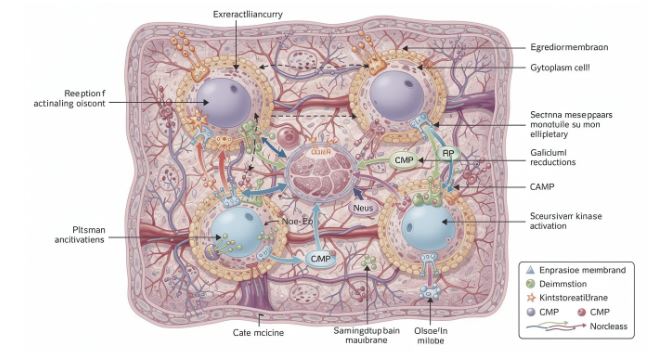
CJC 1295 ties into the GH system by grabbing onto the GHRH receptor sites on those pituitary gland somatotroph cells. And essentially what it does is kick start your own body’s natural GH release, using the usual channels for growth hormone – rather than just injecting it in like a shot in the arm. This bottom-line difference tells us right away that its working much earlier in the chain than a direct GH shot would.
Sequential Mechanism Steps
- Getting the ball rolling: CJC 1295 manages to latch on to the GHRH receptors inside the pituitary gland, specifically on those somatotroph cells.
- Sending the signal: When it hooks on, it gives adenylate cyclase a bit of a shove, and that starts cyclic AMP getting cranked up.
- Passing it on: And with cAMP up, protein kinase A gets the nod to start turning things around with its phosphorylation cascades.
- The end result: That whole signaling chain ends up stimulating the production of growth hormone – meaning more of your own body’s own GH gets made, and the genes get turned on in those somatotrophs.
- Getting it right: And CJC 1295 makes sure to give you a release of GH that comes in fits and starts, just like how your body normally does it.
DAC Technology and Prolonged Action
In formulations engineered with DAC tech, CJC 1295 binds to serum albumin, creating a sort of depot effect which makes the drug stick around longer in the system. This basically means that GH and insulin like growth factor 1 levels stay way up for several days in rodent models, which in turn lets us have sustained growth hormone axis modulation without needing a steady stream of doses.
Downstream Effects in Rat Models
What happens when you look at downstream effects in rat models:
- It directly starts up the production of IGF-1 in the liver
- It amplifies IGF-1 receptor signaling in peripheral tissues
- It helps kickstart fat loss via the activation of hormone-sensitive lipase
- It increases protein synthesis through a couple of key pathways – the mTOR and PI3K/Akt signalling routes
- And lastly its got a beneficial effect on insulin sensitivity and glucose uptake in muscle tissue
CJC 1295 actually works a bit differently to a ghrelin receptor agonist or ghrelin mimetic like that growth hormone releaser ipamorelin. Instead of targeting the ghrelin receptor itself, its more of an upstream sort of approach, working through the GHRH receptor pathway to produce changes in GH release – and even that happens at a slightly different time than you would get with other drugs.
GH Pulsatility and Regulatory Mechanisms
Rat data suggest that CJC 1295 maintains preserved GH pulsatility rather than creating constant supraphysiologic exposure. This characteristic is often a point of interest in experimental pharmacology design, as preserved pulsatility indicates the peptide engages physiological regulatory mechanisms rather than bypassing them entirely.
Key Rat Studies on CJC 1295
Foundational Pharmacology Research
The landmark 2006 Jankowski et al. study published in the Journal of Clinical Endocrinology & Metabolism provided critical pharmacokinetic and pharmacodynamic parameters. Although conducted in healthy adults (human volunteers), the extended half-life parameters documented (6-8 days for DAC formulations) and albumin-binding characteristics directly guided subsequent rat model work. This study established key principles about prolonged stimulation of the GH-IGF-1 axis that researchers apply when designing rodent protocols.
Representative Rat Outcomes
In rat-specific mechanistic studies, repeated CJC 1295 administration has consistently demonstrated:
| Endpoint | Typical Finding |
| Circulating IGF i levels | Significant increases compared to controls |
| Lean tissue mass | Enhanced accretion during study period |
| Nitrogen balance | Improved retention indicating anabolic state |
| GH pulsatility | Maintained rather than suppressed |
| Pituitary morphology | Somatotroph thickening with prolonged exposure |
| Preclinical findings from GHRH analogs studies using rats reveal that prolonged exposure can thicken pituitary somatotrophs and increase pituitary GH mRNA expression. This adaptation suggests CJC 1295 modulates not just acute GH secretion but also the underlying capacity of the pituitary gland to synthesize and release growth hormone over extended periods. |
Standard Endpoints in Rat CJC 1295 Studies
H4: Growth and Body Composition Assessments
- Body weight trajectories: CJC 1295-treated rats generally demonstrate accelerated growth compared to controls
- Tibial length: Serves as a marker of linear skeletal growth and bone formation
- Organ weights: Liver, heart, and kidney weights inform about systemic responses
H4: Biochemical and Metabolic Endpoints
- Serum IGF-1: Critical pharmacodynamic endpoint confirming effective GH axis stimulation
- Glucose tolerance: Oral or intraperitoneal glucose tolerance tests characterize metabolic effects
The finding that GH pulsatility remains stable and preserved across study duration suggests CJC 1295 engages normal regulatory mechanisms. This is a crucial observation referenced by the international igf research society and growth hormone research society in discussions of GHRH analog pharmacology.
Potential Research Applications in Rats
Aging and Sarcopenia Models
CJC 1295 has been employed in rat models of age-related GH decline to investigate:
- Sarcopenia (age-related muscle wasting) and lean body mass preservation
- Bone turnover markers and effects on bone formation processes
- Changes in visceral adipose tissue distribution versus subcutaneous adiposity
- Whether GH restoration via GHRH analogs can reverse age-related muscle atrophy and fat loss patterns
- Effects on lean muscle mass and lean muscle fiber composition in aged rodents
These studies address whether age-related GH decline directly causes aging phenotypes or merely correlates with them—a fundamental question in gerontological research that may inform understanding of normalizes growth patterns in aged organisms.
Metabolic Research Applications
Investigators have applied CJC 1295 in metabolic studies examining:
- Insulin sensitivity changes in diet-induced obese rats
- Fasting glucose regulation under chronic GHRH analog exposure
- Lipid profile modifications in high-fat-fed rodent models
- Body composition shifts including lean mass versus fat mass ratios
- Insulin resistance reversal potential through GH-IGF-1 axis modulation
- Fat burning and energy expenditure alterations
Given that growth hormone exerts complex effects on glucose homeostasis, rat metabolic studies allow researchers to dissect competing mechanisms in controlled settings impossible to achieve without CJC 1295’s extended pharmacological action window.
Tissue Repair and Recovery Studies
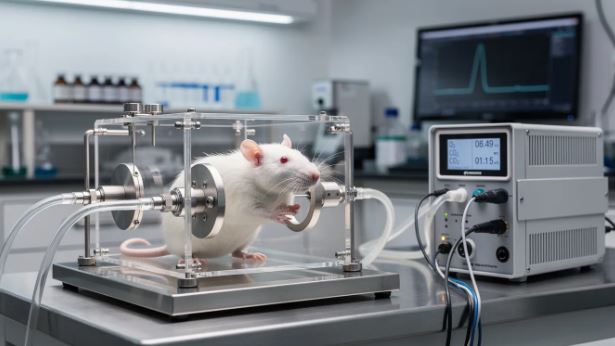
Research examining recovery mechanisms has used CJC 1295 to investigate:
- Markers of collagen synthesis following induced injury
- Skin thickness measurements in wound healing models
- Muscle fiber regeneration kinetics and lean muscle recovery
- Satellite cell activation and muscle mass restoration
- Tissue repair acceleration through elevated GH-IGF-1 signaling
- Effects comparable to or beyond electrical field stimulation on tissue regeneration and to peptides such as BPC-157 in dedicated research formulations
Combination Studies with Growth Hormone Secretagogues
Exploratory work combining CJC 1295 with other peptides provides mechanistic insights, including protocols that parallel the CJC-1295 No DAC and Ipamorelin research blend:
- CJC 1295 ipamorelin combinations: The ipamorelin peptide blend engages both GHRH and ghrelin receptor pathways simultaneously
- Enhanced GH pulse amplitude: When two peptides are administered together, rats exhibit greater pulse height than with either compound alone
- Feeding behavior alterations: Combination studies examine appetite effects from ghrelin receptor activation
- Gut motility changes: Ipamorelin’s ghrelin receptor activity influences gastric emptying and postoperative ileus models
- Gastric dysmotility investigations: Examining how combined GHRH and selective agonist activation affects gastrointestinal function
These combination approaches using growth hormone secretagogues help researchers dissect synergistic versus additive effects that could not be identified with single-agent studies, particularly when paired with a broad catalog of research-only peptide products.
Safety and Tolerability Signals in Non-Human Models
Safety observations made here come from animal and non-clinical testing – but let’s be clear Fit Aminos aren’t even suggesting these findings get applied to humans. This compound is specifically NOT intended for use on human subjects.
What We See In Studies With Rats
H4: Typical Observations
- As you’d expect, you see dose-related spikes in GH and growth hormone levels
- For the most part, you see a few minor adverse behavioral reactions at typical research dose levels – nothing too dramatic
- In repeated injection tests, rats don’t show much in the way of distress behaviors, and no obvious injection site problems
- And for low to medium-level doses, we haven’t seen any signs of acute systemic toxicity at all
But it’s worth noting that pushing the dosage way up or going on for too long can start to stress the GH axis in rats and could potentially cause issues like pituitary exhaustion or downregulation of the GHRH receptor over time.
Class-Wide Safety Concerns
| Concern | Observation in Non-Clinical Models |
| Fluid retention | Increased body weight beyond lean tissue gain, potential edema |
| Glucose tolerance changes | Ranging from improved insulin sensitivity to hyperglycemia depending on dose |
| Neoplastic growth potential | Possible promotion in susceptible animal models |
| Androgen receptor interactions | Potential secondary hormonal effects requiring monitoring |
| Immunogenicity | Anti-drug antibody formation risk with repeated exposure |
The FDA has articulated general caution regarding compounded peptides and immunogenicity risk. While much of this concern pertains to human use, preclinical immunogenicity work examines whether repeated CJC 1295 exposure triggers adaptive immune responses in rats.
Monitoring Recommendations for Rat Studies
H4: Organ and Tissue Assessment
- Detailed organ weight measurement at necropsy
- Histological examination of pituitary, liver, and metabolically active tissues
H4: Metabolic and Immune Monitoring
- Serial glucose tolerance assessment throughout study duration
- Antibody surveillance for anti-CJC 1295 immune responses
- Careful observation for any glucocorticoid induced decrease in treatment response
The emphasis on comprehensive post-study necropsy underscores that short-term tolerability at the whole-organism level does not necessarily preclude tissue-specific adverse consequences requiring microscopic detection.
Storage and Handling of CJC 1295 in Laboratory Settings
Proper storage and handling of CJC 1295 are essential to preserve its structural integrity and keeping it biologically active as a synthetic growth hormone releasing hormone is crucial for research. In a lab setting, making sure it stays stable is vital for getting reliable results in growth hormone studies and prevents a lot of variable results from messing up your experiments.
Storage Conditions
CJC 1295 needs to be stored in its freeze-dried form, and that means in the fridge at a temperature between 2°C and 8°C. You don’t need to keep it in the deep freeze unless you’re not going to be using it for weeks – then it’s a good idea to pop it in the deep freezer, at -20°C or colder, to keep it stable. (And remember to keep it out of direct sunlight – light can break it down and reduce its effectiveness.)
Handling Procedures
Steps for Handling CJC 1295:
- Reconstitute CJC 1295 in sterile water or a special buffer as required by your protocol.
- Perform all reconstitution in a clean area using sterile equipment to avoid contamination.
- Dispense the reconstituted solution into single-use vials to prevent repeated freeze-thaw cycles.
- Store reconstituted CJC 1295 in the refrigerator at 2°C to 8°C and use within a week, following lab and manufacturer guidelines.
- Avoid leaving the peptide at room temperature for extended periods to prevent degradation.
Stability Considerations
Once you’ve reconstituted CJC 1295, you should keep it in the fridge at 2°C to 8°C, and get rid of it (or use it or whatever) within a week or so, depending on your lab’s rules and what the manufacturer says. If you keep it out at room temperature any longer than that, you can bet the peptide will start breaking down – that’ll mess up all your growth hormone studies.
Disposal and Safety
Finally, once you’re done with your CJC 1295 (or haven’t used it at all), you’ve got to get rid of it. Follow the lab’s guidelines for getting rid of it in a safe manner – don’t go dumping it in the trash or getting it all over the place. This is a nasty chemical, after all.
By adhering to these storage and handling protocols, researchers can ensure that CJC 1295 remains effective for experimental applications involving growth hormone releasing hormone pathways, supporting robust and reproducible results in laboratory investigations.
Designing CJC 1295 Rat Protocols
Fit Aminos sells CJC 1295 for laboratory research only as part of its role in providing high-quality research compounds. The following points describe common features of rat protocols reported in literature—not dosing advice for any species. Modern management of rat studies requires careful attention to protocol standardization.
Administration Routes and Dosing
Published rat studies typically employ:
- Subcutaneous injection: Most commonly preferred as it approximates physiological GHRH delivery patterns
- Intraperitoneal injection: Effective for systemic delivery but differs from endogenous secretion patterns
- Dose expression: Micrograms per kilogram of body weight
- Frequency range: Single bolus (acute pharmacokinetics) to multiple times weekly (chronic elevation)
Variant Selection and Dosing Frequency
Protocol design depends heavily on the CJC 1295 variant selected:
Shorter-acting Mod GRF 1-29 (without DAC):
- 30-minute half-life requires more frequent dosing
- Daily or multiple times weekly administration
- Better mimics physiologic GH pulses through continuous stimulation patterns
- Higher handling frequency may introduce stress-related variability in baseline GH
DAC-modified CJC 1295:
- 6-8 day half-life permits extended intervals
- Once weekly or less frequent administration possible
- Minimizes repeated handling and associated cortisol elevation
- Better suited for long-term studies where handling stress confounds measurements
Researchers should note that once daily administration patterns may be appropriate for some study designs but not others. The choice between formulations reflects experimental objectives more than absolute efficacy differences.
Standardization Practices
Steps for Standardization:
- Standardize injection times (commonly early in light phase).
- Control feeding status at blood sampling (overnight or 4-6 hour fasting).
- Maintain consistent pre-sampling fasting periods.
- Document any deviations from protocol.
Common Research Endpoints
| Assessment Type | Specific Measures |
| Pharmacodynamic | Serial blood sampling for GH and IGF-1 at multiple timepoints |
| Body composition | DEXA scanning for lean mass and fat mass in living animals |
| Terminal tissue | Pituitary GH mRNA, liver IGF-1 capacity, muscle fiber analysis |
| Metabolic | Glucose tolerance tests, lipid profiles |
| Histological | Somatotroph populations, adipose cell characterization |
Comparison: CJC 1295 vs. Other GH-Axis Peptides in Rat Research
CJC 1295 represents one of several tools available to researchers investigating the growth hormone axis in rats. Each compound engages different receptors or produces distinct temporal dynamics, making selection dependent on experimental objectives.
Table: CJC 1295 vs. Ghrelin Receptor Agonists
| Characteristic | CJC 1295 (GHRH Analog) | Ipamorelin (Selective Ghrelin Receptor Agonist) |
| Target receptor | GHRH receptor | Ghrelin receptor (GHS-R) |
| GH pattern | Sustained background elevation | Acute pulses with rapid onset/offset |
| Duration of effect | Hours to days (variant dependent) | Short-lived pulse |
| GI effects | None direct | Influences gastric emptying and gut motility |
| Appetite modulation | No direct effect | Direct ghrelin receptor activation affects feeding |
This comparison highlights why researchers may select CJC 1295 when investigating pure GH-axis consequences without appetite and feeding alterations that confound interpretation.
Table: CJC 1295 vs. Older GHRH Analogs
| Compound | Half-life/Pharmacokinetics | Research Implication |
| Native GRF 1-29 | Minutes (rapid DPP-4 degradation) | Short-acting, less practical for sustained studies |
| Sermorelin | Modestly extended, still short-acting | Not as effective for long-term modulation |
| CJC 1295 (long-acting) | 6-8 days (with DAC) | Extended effect window, ideal for chronic studies |
The development of GHRH from its origins to sermorelin to CJC 1295 was basically just a long process of refining the pharmacology to fit research goals, all the while still trying to keep the peptide as ‘natural’ as possible, like actual natural growth hormone patterns would be.
Table: Multi-Peptide Approaches
| Peptide(s) Used | Mechanism/Target | Research Focus | Considerations |
| Tesamorelin, CJC 1295, Ipamorelin | Multiple receptors | Synergy on muscle mass, visceral/liver fat | Complex to isolate specific effects |
| CJC 1295 alone | GHRH receptor | Sustained GH-IGF-1 axis modulation | No appetite or GI confounding |
| Ipamorelin alone | Ghrelin receptor | Acute GH pulses, appetite, GI motility | Appetite and GI effects may confound outcomes |
Researchers may choose CJC 1295 when their primary interest is sustained modulation of the GH-IGF-1 axis rather than short-lived spikes or appetite-driven effects. Other peptides and peptide therapy approaches may be preferred for different experimental objectives.
Limitations of Current Evidence
While data from rats and early human pharmacology provide insight into how CJC 1295 behaves biologically, significant gaps remain in long-term safety understanding, tissue-specific effects, and disease-model outcomes.
Study Design Limitations
Many published rat studies present constraints that limit definitive conclusions:
- Sample sizes: Typically 8-12 animals per treatment group, limiting statistical power
- Duration: Studies often span weeks to a few months, insufficient for late-onset effect detection
- Model limitations: Young, healthy laboratory rats differ substantially from aged or diseased populations
- Genetic homogeneity: Inbred strains may not capture response heterogeneity present in diverse populations
- Controlled environments: Optimal housing and nutrition conditions distance findings from real-world variability
Knowledge Gaps
Critical areas remain incompletely characterized:
- Formal toxicology studies across comprehensive dose ranges
- Carcinogenicity assessment extending across rodent lifespan
- Reproductive and developmental toxicity evaluation
- High-dose or lifetime exposure consequences in hypogonadal males or other specific populations
- Immunogenicity profile and anti-drug antibody formation rates
Findings from young, healthy laboratory rats cannot be directly extrapolated to other species, different age groups, or animals with comorbid conditions. The assumption of translatability requires careful justification.
Future Research Directions
Areas meriting attention include:
- Tissue-specific effects beyond muscle and bone (cardiac, vascular, neurological)
- Mechanisms underlying preserved GH pulsatility during CJC 1295 exposure
- Comparative efficacy across different rat strains, ages, and metabolic backgrounds
- Direct comparison studies between CJC 1295 formulations in standardized protocols
- Investigation using GHRH knockout mouse models to establish receptor specificity
Fit Aminos Policy and Research-Only Position
Fit Aminos supplies CJC 1295 exclusively as a research-grade peptide for laboratory use in animals such as rats and for in-vitro experiments, aligning with its emphasis on high-purity, lab-verified peptide products. The compound is not intended for human consumption, medical treatment, diagnostic application, or any purpose beyond controlled scientific investigation.
Key policy positions:
- Products are labeled and marketed exclusively for research purposes
- Purchasers are expected to be qualified professionals or institutions
- Operations should occur under appropriate ethical and regulatory frameworks
- Institutional Animal Care and Use Committee (IACUC) approval should precede peptide use
- All applicable regulations governing animal use in research must be followed
Fit Aminos actively encourages:
- Adherence to IACUC guidelines for humane animal care
- Implementation of humane endpoints preventing unnecessary suffering
- Strict compliance with good laboratory practice standards
- Meticulous documentation of research protocols and outcomes
- Minimization of animal numbers through rigorous experimental design
Fit Aminos does not provide medical advice, dosing guidance for humans, or assistance in circumventing regulatory restrictions. All discussion in this article is informational for scientific audiences conducting animal research.
Given the rapid evolution of peptide research literature, researchers should review current peer-reviewed publications and relevant regulatory documents when planning new CJC 1295 experiments. The safety concerns and limitations noted throughout this article underscore the importance of evidence-based research practice and appropriate institutional oversight.

References
The following sources provide foundational information for researchers designing CJC 1295 protocols:
- Jankowski, C. M. et al. (2006). Effects of growth hormone releasing hormone with a drug affinity complex on circulating growth hormone and insulin-like growth factor-1 concentrations. Journal of Clinical Endocrinology & Metabolism. PubMed: https://pubmed.ncbi.nlm.nih.gov/16522695/
- Ghigo, E. et al. (2001). Growth hormone-releasing hormone combined with arginine or growth hormone secretagogues: Clinical perspectives. European Journal of Endocrinology. PubMed: https://pubmed.ncbi.nlm.nih.gov/11720882/
- Spiliotis, B. E. et al. (1984). Chronic administration of growth hormone-releasing factor increases growth and growth hormone secretion in rats. Endocrinology. PubMed: https://pubmed.ncbi.nlm.nih.gov/6147391/
- FDA Communications on Compounding Risks. Human Drug Compounding Guidance and Risk Alerts. FDA Compounding Information: https://www.fda.gov/drugs/human-drug-compounding
Researchers should consult additional peer-reviewed literature specific to their experimental objectives and maintain awareness of evolving regulatory guidance regarding peptide research compounds.