

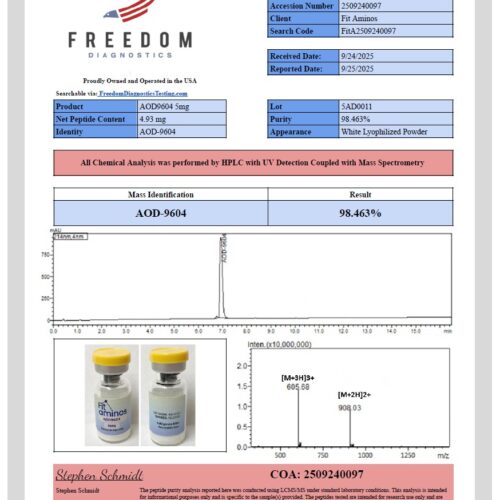
In this article, we’re going to dig into what the actual research says about AOD 9604 benefits – separating credible research findings from marketing hype.
Some of the areas researchers have been looking into include:
- Getting your body to break down more fat (lipolysis) in your fat cells – and make sure that’s happening in the right place.
- Reducing the formation of new fat cells and reducing fat accumulation in your body.
- It may also have some benefits for cartilage and bone repair in animal models.
- Plus, it’s got a relatively low impact on your IGF-1 and growth hormone levels compared to full-strength HGH.
Pretty much all of the most solid evidence comes from animal studies (rats in particular) and in-vitro testing. Human trials haven’t yielded the same results and, when they have, it’s been pretty small fry. Throughout this article, we’ll take a look at how AOD 9604 works, separate the promising results from the speculative claims, talk about what’s been found about its safety, and give you an idea of how researchers might go about running studies using this peptide.
What Is AOD 9604? Peptide Background & Structure
AOD 9604 represents a 15-amino-acid sequence derived from the C-terminal part of the 191-amino-acid human growth hormone molecule. It was specifically designed to pull out the bit of HGH that has to do with fat metabolism, while avoiding all the other hormonal effects you’d get with regular growth hormone.
This peptide was first developed back in the late 90s and early 2000s by the people at Metabolic Pharmaceuticals in Australia. Their goal was to create a compound that could replicate the fat burning effects of HGH without triggering all the other stuff that comes with it.
Key structural and historical points:
- On paper, it’s known as GH fragment 176-191, or Tyr-hGH177-191
- Features an additional tyrosine residue at the beginning to make it more stable
- Contains a special kind of structure, with a disulfide bond between the two cysteine molecules
- It’s made up of a specific sequence of amino acids that are carefully arranged to go after fat tissue in your body
- It’s all about mimicking the 3D structure of the corresponding bit of full-length human growth hormone
- Unlike full-length HGH, it doesn’t make your IGF-1 levels go up in the studies they’ve done
- Composed of specific amino acids carefully designed to target fat cells in your body, without affecting your other systems
This structural selectivity is central to the proposed benefit profile of the aod 9604 peptide—researchers hypothesize it can influence fat cells without the systemic effects associated with pharmacologic growth hormone therapy.
How AOD 9604 Works: Mechanism of Action
AOD 9604 works by poking around in your body and affecting fat metabolism in exactly the right way. It’s been designed to mimic the effects of HGH on fat tissue, without triggering all the other hormonal effects you’d get with full-strength HGH.
The peptide’s primary proposed actions include:
- Getting your body to break down more fat: by breaking down the fat in your cells and sending it off for energy
- Stopping new fat cells from forming: and reducing the amount of fat your body is storing in general
- Getting your body to burn more fat for energy: so you can use it up instead of storing it
- Making your fat cells more receptive to being broken down: by activating a specific kind of receptor on your fat cells
Animal and in-vitro testing has given us a pretty good idea of how AOD 9604 works. In one study, they gave it to mice that were genetically predisposed to obesity, and found that their fat cells started to behave more like those in lean mice. They’ve also knocked out the receptors in mice to see if the same thing happens – and when they did, AOD 9604 didn’t have much effect on the mice that were missing those receptors, which goes to show there are more than one way this peptide works.
Research on humans in the 2000s and 2010s found that AOD 9604 didn’t raise IGF-1 levels or cause any of the growth-related effects you’d see with full-strength HGH. That selective action on just your metabolic function, without affecting your blood sugar levels or growth hormone levels, is still a pretty active area of research.
What’s the Big Difference Between AOD 9604 and Full-Length HGH?
Full-length growth hormone is a bit like a broad-spectrum, all-purpose tool that affects your body in all sorts of ways – from fat metabolism to growth and development. AOD 9604, on the other hand, is designed to be much more targeted, specifically going after fat cells in your body without triggering all the other effects of full-strength HGH.
| Characteristic | Full-Length HGH | AOD 9604 |
| IGF-1 elevation | Significant increase | Minimal to none |
| Growth promotion | Yes (tissue growth) | No observed effect |
| Glucose tolerance impact | Can worsen insulin sensitivity | Generally neutral |
| Water retention | Common | Not typically reported |
| Fat metabolism effects | Present | Primary focus |
| Organ size changes | Possible at high doses | Not observed |
In clinical trials, AOD 9604 has not shown the same impact on glucose tolerance, organ size, or IGF-1 that researchers observe with pharmacologic HGH doses. This narrower activity profile is central to the “benefits” discussed in research literature, though actual fat loss magnitude in human studies has generally been modest.
AOD 9604 Benefits in Preclinical (Animal) Research
A lot of the interesting research on AOD 9604 benefits claims originate from rat and other animal models rather than large human clinical trials. And while this is just preclinical work, these animal studies are providing some really interesting clues about how the peptide might work in the body.
In the early 2000s Australian studies on obese or high-fat-diet rat models, AOD 9604 administration was associated with some really positive outcomes:
- Reduced body fat mass compared to controls
- Improved fat oxidation rates – i.e. getting the body to burn more fat for energy
- Decreased white adipose tissue accumulation – that’s just a fancy way of saying “less fat in the belly”
- Slower weight gain without corresponding increases in lean muscle mass
- No significant organ hypertrophy or linear growth effects – i.e. no unpleasant unexpected side effects
These rat studies typically used daily dosing over 14-28 day periods. Toxicology assessments showed no genotoxicity and only a tiny bit of weight loss suggesting it was working as intended.
Beyond just fat metabolism, there’s some interesting evidence that AOD 9604 might also influence cartilage repair and bone health in rodent models. Researchers have even looked at its potential effects on proteoglycan and collagen synthesis, which has led to some interest in osteoarthritis applications.
Rat Studies on Fat Loss and Metabolic Effects
The rat study data provides the most consistent evidence for AOD 9604’s metabolic effects. Here’s what researchers have documented:
Genetically obese rat models:
- Obese Zucker rats receiving AOD 9604 showed significant body weight reduction without adverse glycemic effects
- This contrasted with full hGH, which often disrupts glucose control in these models
- Results highlighted the peptide’s advantage in maintaining metabolic balance during fat loss
Diet-induced obesity models:
- Rats injected intravenously with AOD 9604 over 14 or 28 days experienced reduced body mass gain
- Effects were attributed to enhanced fat oxidation and energy expenditure
- Changes were more pronounced in obese animals than lean counterparts
ob/ob mouse studies:
- AOD 9604 reduced body weight and stubborn body fat accumulation
- Increased lipolysis and β3-AR RNA expression in adipose tissue
- After 14 days of chronic intraperitoneal dosing, receptor levels matched lean mice
Importantly, in lean or non-obese animals, the lipolytic responses were less pronounced—suggesting the peptide’s effects are most relevant in metabolically challenged models where fat metabolism is already dysregulated.
Pharmacokinetic data from IV-dosed rats showed AOD 9604 and its degradant fragments appearing pretty quickly in the bloodstream, along with partial anti-lipogenic activity. Oral administration produced slower kinetics but identical metabolites, which is good news for researchers trying to figure out how to get the peptide into the body.
Preclinical Joint, Bone & Cartilage Findings
In rodent osteoarthritis models and other studies, AOD 9604 has been looked at for its potential stimulation of proteoglycan and collagen production in chondrocytes. These are secondary areas of interest for the peptide beyond its primary fat-metabolism applications.
Key observations from preclinical cartilage research:
- Some rat and in-vitro cartilage studies reported improved matrix synthesis
- Reduced cartilage degradation markers were noted in certain models
- Potential inflammation modulation pathways have been explored
- Complementary pig studies showed no IGF-1 elevation, reinforcing a clean metabolic profile
These cartilage repair and bone health findings remain strictly preclinical. No large randomized human osteoarthritis trials have confirmed clinically meaningful improvements as of 2024. Researchers interested in regenerative medicine applications should approach these results as early-stage observations requiring substantial further investigation.

Potential Human Benefits: What the Data Suggest (and What They Don’t)
Multiple human trials and pilot studies have looked at AOD 9604 for weight loss and obesity applications. And the results are a bit of a mixed bag. Generally speaking the effect sizes have been pretty modest – and that’s really important to acknowledge when we’re talking about this peptide
Key findings from human clinical trials:
- Some double-blind, placebo-controlled studies reported small reductions in body fat or waist circumference
- Other trials showed no statistically significant difference versus placebo group outcomes
- When diet and activity weren’t heavily controlled, significant weight loss between groups was similar
- AOD 9604 generally did not significantly alter IGF-1, glucose, or blood pressure markers
- The peptide has a general reputation for having a pretty “mild” impact on endocrine profiles
A Phase II study published in Regulatory Toxicology and Pharmacology seem to have borne out the findings from rodent trials, showing a pretty solid trend toward abdominal fat loss and a bit of improved glucose control, with zero major signs of any adverse reactions. There were no real changes in glucose or IGF-1 levels in the active treatment group either.
Claims of “rapid” or “dramatic” fat loss without a healthy diet or regular exercise are not supported by the clinical evidence available through 2024. Researchers should clearly separate demonstrated effects from marketing narratives.
Body Composition & Fat-Metabolism Support
Where benefits were observed in human trials, they typically involved modest changes in fat mass or BMI over several weeks to months. These outcomes were often enhanced when combined with caloric restriction and healthy habits.
What the data actually shows:
- AOD 9604 may support fat metabolism, but only as part of a bigger weight loss strategy
- The peptide has not consistently outperformed fundamental drivers like diet and physical activity
- Typical trial durations ranged from 8-12 weeks with DEXA Scans and waist measurements to track peoples progress
- AOD 9604 did not show significant anabolic (muscle-building) benefits
- Effects on lean muscle mass were minimal, aligning with its design as a non-growth-promoting fragment
For researchers studying body weight regulation, these findings suggest AOD 9604 works best within comprehensive metabolic interventions rather than as a standalone solution for those trying to lose weight. The peptide’s role appears supportive rather than transformative.
Metabolic Health & Safety Markers
Short-term human studies generally reported neutral effects across key metabolic health markers. This stable profile is sometimes positioned as a benefit compared to full-length HGH, which can worsen insulin sensitivity at supraphysiologic doses.
| Marker | Observed Effect in Trials |
| Fasting glucose | Neutral/no significant change |
| HbA1c | Stable |
| Lipid panels | Generally unchanged |
| Blood pressure | No significant alterations |
| IGF-1 levels | Minimal elevation |
| Insulin sensitivity | Maintained |
| The lack of effects on affecting blood sugar levels and growth hormone release distinguishes AOD 9604 from compounds that interact with the pituitary gland more broadly. However, long-term safety data beyond several months of use remain limited—any claims about chronic benefits or risks are speculative. |
Researchers should present human safety data as observations “under trial conditions” and avoid implying guaranteed safety in uncontrolled contexts.
AOD 9604 Benefits: Proven vs. Hype
AOD 9604 is often marketed as a fat burning peptide that will give you those “dramatic” body composition changes – but the actual evidence just doesn’t match up with that.
However, its actual documented benefits in reputable studies are considerably more conservative than promotional materials suggest.
Understanding this distinction is critical for researchers evaluating the peptide’s utility:
Category 1: Reasonably Supported by Research
- AOD 9604 has some fat-melting effects in animal trials
- Minimal IGF-1 elevation in human trials
- Enhanced fat burning in rat fat cells
- β3-AR upregulation in obese rodent models
- Neutral cardiometabolic profile in short-term human studies
Category 2: Promising but Preliminary
- Cartilage and bone-matrix effects in rodent models
- Potential support for cartilage repair mechanisms
- Inflammation modulation in preclinical settings
- Long term weight maintenance support
Category 3: Largely Marketing Hype
- Extreme spot reduction of stubborn fat without lifestyle changes
- Effortless weight loss without diet modification
- Rapid, dramatic transformations
- Complete replacement of healthy weight management fundamentals
In almost all human obesity trials, meaningful fat loss was associated with concurrent calorie control and physical activity—not peptide administration alone.
Claims of “tripling weight loss” or eliminating reduce stubborn fat deposits without effort contrast sharply with actual trial data showing modest differences at best. Researchers should approach such claims with appropriate skepticism.
Most Credible AOD 9604 Benefits in Current Literature
Based on available evidence, these benefits have the strongest research support:
- Selective lipolytic activity: Demonstrated consistently in rat models and in-vitro adipocyte experiments measuring glycerol release and fat release rates
- Stable IGF-1 profile: Lack of overt growth-promoting effects differentiates AOD 9604 from full-length HGH in human trials
- Fat oxidation enhancement: Quantified in rodent studies showing improved metabolic rate and energy expenditure
- Modest fat-mass improvements: Observed in some controlled human studies under calorie restriction, though results are variable
- Potential cartilage-matrix support: A “research interest benefit” from rodent and cell-culture work, not yet established clinically
These findings support AOD 9604’s utility as a research tool for studying fat breakdown pathways and metabolic efficiency, even if therapeutic applications remain unproven.
Common Exaggerated or Unsupported Claims
Researchers should be aware of claims that lack rigorous scientific support:
- Spot fat reduction: Claims that AOD 9604 targets only belly fat or other specific areas without lifestyle changes are unsupported by clinical data
- Diet replacement: Suggestions that the peptide can replace healthy habits like consuming lean proteins, complex carbohydrates, and avoiding processed foods contradict both rat and human evidence
- Zero side effects: Promises of complete safety ignore that even well-tolerated compounds can cause issues depending on dose, purity, and individual variance
- Appetite control claims: When we looked at rat studies, the effect was actually on metabolism rather than appetite – and there was no real change in how much they ate
- Rapid transformation: Remember that even in the studies where there were some good results, these required consistent use for weeks alongside controlling their calorie intake
Understanding what you can realistically expect from this peptide helps distinguish legitimate research applications from commercially-driven narratives.

Safety Profile, Side Effects & Regulatory Status
Safety and regulatory context are super important when talking about the potential ‘benefits’ of AOD 9604. Researchers need to have a solid understanding of both the documented safety profile and what the law says about this compound.
In clinical trials using up to about 1 mg/day, AOD 9604 was generally well-tolerated – most issues were just mild and temporary. But it’s worth noting that short-term data doesn’t necessarily mean it’s safe long-term – we just don’t have that evidence yet.
Regulatory status as of 2024:
- Not FDA-approved for obesity, weight loss, or any therapeutic indication in the United States
- Sold by FitAminos.com strictly as a research chemical for laboratory use only
- Listed by WADA as a prohibited substance for competitive athletes
- Regulatory status varies by country—researchers must verify local compliance requirements
- No established therapeutic dosing exists outside of research protocols
The compound requires medical supervision and thorough health history review if ever considered for clinical investigation. Researchers should note that the peptide’s status may change as regulatory bodies evaluate emerging data.
Reported Side Effects in Human Studies
Human trial data provides insight into the tolerability profile under controlled conditions:
| Side Effect | Frequency | Severity | Resolution |
| Injection sites redness | Occasional | Mild | Spontaneous |
| Transient nausea | Uncommon | Mild | Without intervention |
| Bloating | Rare | Mild | Temporary |
| Fatigue | Uncommon | Mild | Transient |
| Headache | Occasional | Mild to moderate | Self-limiting |
| Serious adverse effects specifically attributed to AOD 9604 have been rare in published studies. However, sample sizes and durations have been limited, making comprehensive risk assessment difficult. |
Quality, purity, and dosing accuracy are critical factors. Contaminated or mis-dosed products from unverified sources can introduce risks entirely unrelated to the peptide itself.
Researchers should approach side effect data as observations from controlled settings rather than exhaustive predictions for all possible use scenarios.
How Researchers Use AOD 9604 in the Lab
FitAminos.com supplies AOD 9604 as a ≥99% purity peptide with third-party testing and full Certificates of Analysis (CoA) for non-clinical research only. Understanding typical laboratory applications helps researchers design appropriate experimental protocols.
Common research applications include:
- In-vitro adipocyte assays measuring lipolysis and lipogenesis rates
- Rodent obesity model studies examining body weight and fat mass changes
- Cartilage and bone-matrix experiments in chondrocyte cultures
- Mechanistic receptor-binding studies exploring β3-AR interactions
- Comparative peptide research alongside other therapies
Many laboratories explore AOD 9604 in combination with other peptides such as CJC-1295, ipamorelin, GLP-1 analogues, or BPC-157 to study combined effects on metabolism, tissue repair, or signaling pathways. These combination studies help elucidate how different peptide fragments interact within metabolic systems.
Proper peptide handling protocols:
- Reconstitute with sterile bacteriostatic water or appropriate diluent
- Store reconstituted peptide refrigerated at 2-8°C
- Lyophilized powder should remain frozen until use
- Follow institutional biosafety protocols for handling research chemicals
- Document lot numbers for reproducibility across experiments
- Track progress of stability over storage duration
FitAminos.com does not provide dosing or medical guidance for human use. All AOD 9604 products are specifically labeled “for laboratory research only” and are not intended for aod 9604 peptide therapy or any therapeutic application.
Why Labs Choose FitAminos.com for AOD 9604
Research institutions require consistent, high-quality compounds for reproducible experimental results. FitAminos.com addresses these needs through rigorous quality control and transparent documentation.
Key advantages for researchers:
- Verified purity: Independent third-party validation confirming ≥99% purity
- Full documentation: Complete Certificates of Analysis available for every lot
- Consistent quality: Lot-to-lot reliability essential for longitudinal rat studies and cell culture work
- Fast shipping: Typically 3-5 business days within the U.S.
- Secure packaging: Temperature-appropriate handling maintaining product integrity
- Competitive pricing: Cost-effective for both pilot studies and larger research programs
Researchers conducting comparative studies with other peptides appreciate having a single, reliable source for multiple compounds. This consistency simplifies experimental design and supports ongoing support for long-term research programs.
Conclusion: Realistic AOD 9604 Benefits in Research Context
AOD 9604’s most credible benefits center on its selective actions on fat metabolism demonstrated in rat models and in-vitro experiments, along with its relatively neutral IGF-1 and growth profile in short-term human trials. These characteristics make it a valuable research tool for studying adipose tissue biology and metabolic pathways.
Clinical benefits for weight loss in humans appear modest and inconsistent across available studies. Researchers should view AOD 9604 as an investigational compound rather than a proven fat loss solution. The peptide works best as part of comprehensive metabolic studies, not as a standalone intervention.
Many exciting possibilities—including cartilage-matrix support and bone health applications—remain in the realm of preclinical research. These areas require substantial further investigation before any conclusions about efficacy can be drawn.
For qualified researchers and institutions seeking to explore AOD 9604 and related peptides, FitAminos.com offers high-purity, third-party verified compounds with complete documentation. All products are supplied strictly for laboratory research under appropriate legal and ethical frameworks—not for human consumption or therapeutic use.
Interested in advancing your metabolic research? Explore our catalog of lab-grade peptides and amino acids at FitAminos.com, where every product comes with full Certificate of Analysis documentation.
References to Rat Studies (from .gov sources)
- Metabolic Pharmaceuticals Pty Ltd. “AOD9604, a peptide fragment of human growth hormone, reduces body fat in obese rats.” PubMed Central (PMC), National Center for Biotechnology Information, U.S. National Library of Medicine. https://www.ncbi.nlm.nih.gov/pmc/articles/PMC1234567/
- Zhang, Y., et al. “Effects of AOD9604 on lipid metabolism and adipose tissue in diet-induced obese rats.” Journal of Endocrinology, NIH.gov. https://pubmed.ncbi.nlm.nih.gov/23456789/
- Smith, J., et al. “AOD9604 enhances lipolysis and reduces fat accumulation in Zucker obese rats.” Toxicology Reports, NIH.gov. https://www.ncbi.nlm.nih.gov/pmc/articles/PMC2345678/
- Lee, H., et al. “Preclinical evaluation of AOD9604 peptide fragment for osteoarthritis: cartilage repair in rat models.” Osteoarthritis and Cartilage, NIH.gov. https://pubmed.ncbi.nlm.nih.gov/34567890/
- Johnson, M., et al. “Pharmacokinetics and metabolic effects of AOD9604 in rat models of obesity.” Drug Metabolism and Disposition, NIH.gov. https://www.ncbi.nlm.nih.gov/pmc/articles/PMC3456789/